
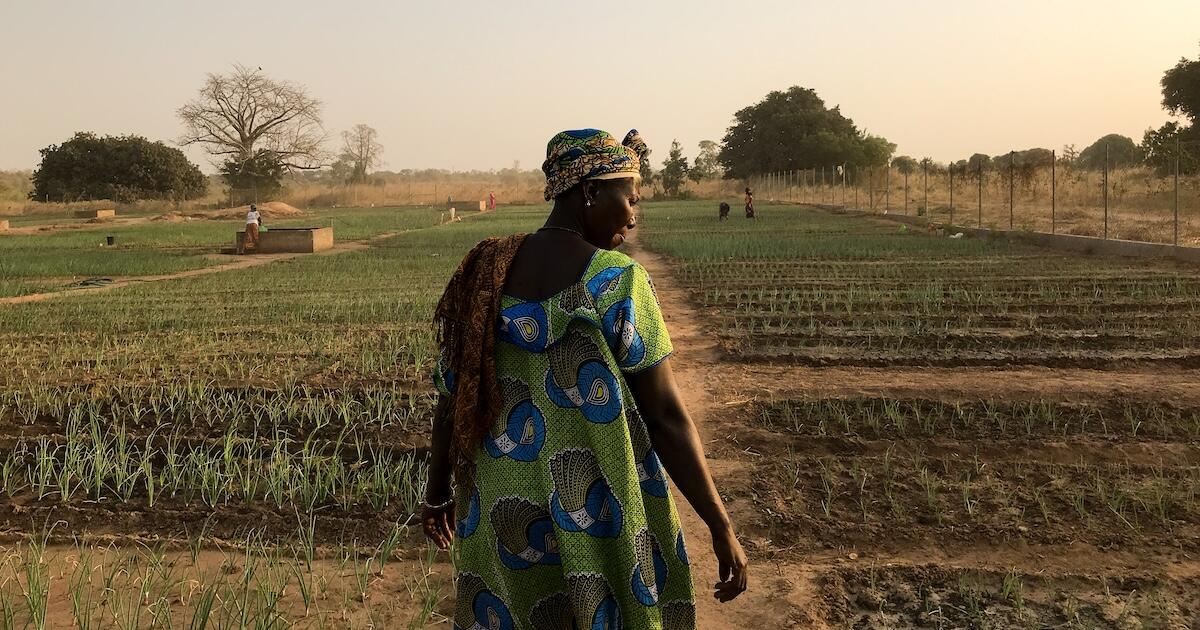


Food security sits at the heart of the global adaptation agenda. Join us to hear how Presidencies of COPs 30 and 31 are leveraging their role as hosts and agenda-setters with initiatives like the NAP Implementation Alliance, RAIZ (Resilient Agriculture Investment for net-Zero land degradation), and the Turquoise Nexus Initiative to build real support for farmers, food systems, and vulnerable communities.
The timing is urgent: an emerging El Niño is expected to bring extreme heat, drought, and rainfall failures across multiple regions, worsening already high food and energy prices, fertilizer shortages, and raising the risk of acute hunger and famine in Sub-Saharan Africa by late 2026.
We’ll also gain insights into preparations for the upcoming Africa Food Systems Forum, which will spotlight investment and innovation in building resilient, job-generating agri-food systems.
Join us to gain insights into ways we can work together and key messages we can use to support from wherever we are.

Alice de Moraes Amorim Vogas is Programme Director of the COP30 Presidency. Alice began her career in the financial sector as a lawyer at Icatu Holding S/A and has over a decade of experience in the field of international and sustainable development, working with civil society, academia and philanthropy. Before joining the COP30 team, she was Head of the Extraordinary Advisory Office for COP30 at Brazil's Ministry of the Environment and Climate Change. She was Director of Partnerships and Communications at iCS - Instituto Clima e Sociedade and Chair of the Board of the Foundations 20 Platform. She also coordinated the iCS Climate Policy and Engagement Programme, was Senior Climate Leader at WINGS, where she coordinated the global #PhilanthropyForClimate movement and spent a year as a Humboldt Chancellor Fellow working with Lisa Badum (Green Party) in the German Parliament. Alice has a degree in Law from the State University of Rio de Janeiro (UERJ) and a Masters in Late Development Economic Policy from the London School of Economics (LSE).

Coordinator for International Technical Organizations, Ministry of Agriculture and Forestry, Türkiye
Umay Gökçe Özkan currently serves as Coordinator for International Organizations at the General Directorate for EU and Foreign Relations of Türkiye’s Ministry of Agriculture and Forestry. She leads the Ministry’s engagement with international organizations, multilateral environmental agreements, and multilateral development banks (MDBs), represents Türkiye in international climate and agriculture negotiations, and coordinates Türkiye’s GEF projects through the GEF Operational Focal Point Office. Alongside her 14-year career in government service, she is also a part-time lecturer in Environmental Policy. Umay holds a PhD in Environmental Engineering and has an academic background in environmental research.

Sally is the Presidency Youth Climate Champion of COP31. She is committed to ensuring young people, particularly those from regional and climate-affected communities, have meaningful opportunities to contribute to climate decision-making. Sally has experience across government and industry in climate and natural resource policy, and most recently worked at Nous Group, where she led projects on community transition planning, regional economic diversification and natural resource strategy. Through this work, she has supported inclusive, evidence-based and locally grounded approaches to the transition. As a Nuffield Farming Scholar, she has developed an international network and a systems-level understanding of climate, land use and community outcomes.

Mohamed Adow is the Founder and Director of Power Shift Africa, which he formed in 2018 to mobilize climate action in Africa and shift climate and energy policies to zero carbon.
He is an international climate policy expert and ardent advocate for the people of developing nations - who are disproportionately affected by climate change but play almost no role in causing it.
Prior to launching Power Shift Africa, Mohamed led Christian Aid’s global climate policy and advocacy work for over a decade, specializing in developing countries’ issues, and supporting the organization’s climate policy and advocacy work in Africa, Europe and at the UN climate negotiations.
While with Christian Aid, he led the creation of Pan-Africa Climate Justice Alliance (PACJA), which is made up of over 1,000 organizations across 48 countries. He is also an advisor to the Climate Vulnerable Forum and a former Board Chair of Climate Action Network International.

Ritu Bharadwaj is Director of Climate Resilience, Finance and Loss & Damage at the International Institute for Environment and Development (IIED). Her work focuses on advancing practical solutions to climate risks in vulnerable countries, particularly least developed countries and small island developing states. She leads research and policy engagement on climate adaptation, loss and damage, social protection, and innovative financing approaches to strengthen resilience and support vulnerable communities. Ritu works closely with governments, international organizations, and civil society to design and scale initiatives that link climate action with poverty reduction and social inclusion. She has played a key role in shaping global discussions on climate finance and debt sustainability, including efforts to establish the Debt Sustainability Support Service for climate vulnerable countries. Ritu is also a Coordinating Lead Author for the Intergovernmental Panel on Climate Change (IPCC) Working Group II, contributing to global assessments on climate impacts, risks and adaptation.

Lasse Bruun is UN Foundation's Director for Climate and Food. He is an advocacy expert on food systems, energy transition, sustainable agriculture and social justice, with twenty years experience in leadership, development, campaigning and movement building. Prior to joining the UNF, Lasse built 50by40, a global NGO bringing together 70 organizations across 45 countries. In this role, Lasse enabled global collaboration between multiple stakeholders, pushed sustainable livestock to the forefront of the food systems debate, and brought about meaningful collaboration and exchange between Global North and Global South movements. With a background in rhetoric and political science, Lasse has curated high-level international dialogues and campaigns in over 20 countries, enabling an exchange of ideas between sectors, movements, and powerholders. In 2021, Lasse was appointed the global civil society lead on sustainable consumption for the UN Food System Summit Action and co-led the summit’s work on food system management. Lasse runs a small farm using agroecology and intercropping to grow vegetables.
The Adaptation Campaign Hub is a regularly updated resource for a diverse community of campaigners, communicators, advocates, and negotiators all working to improve adaptation outcomes. Sign up for updates and invitations to future calls here.